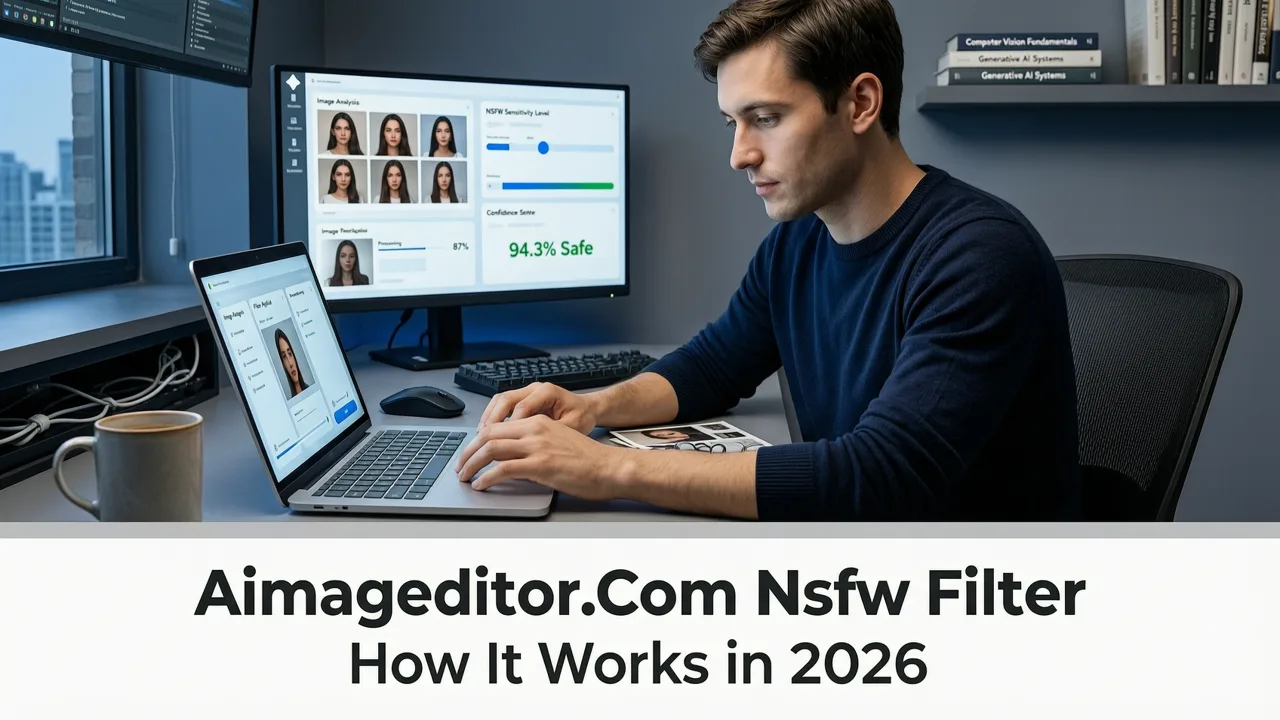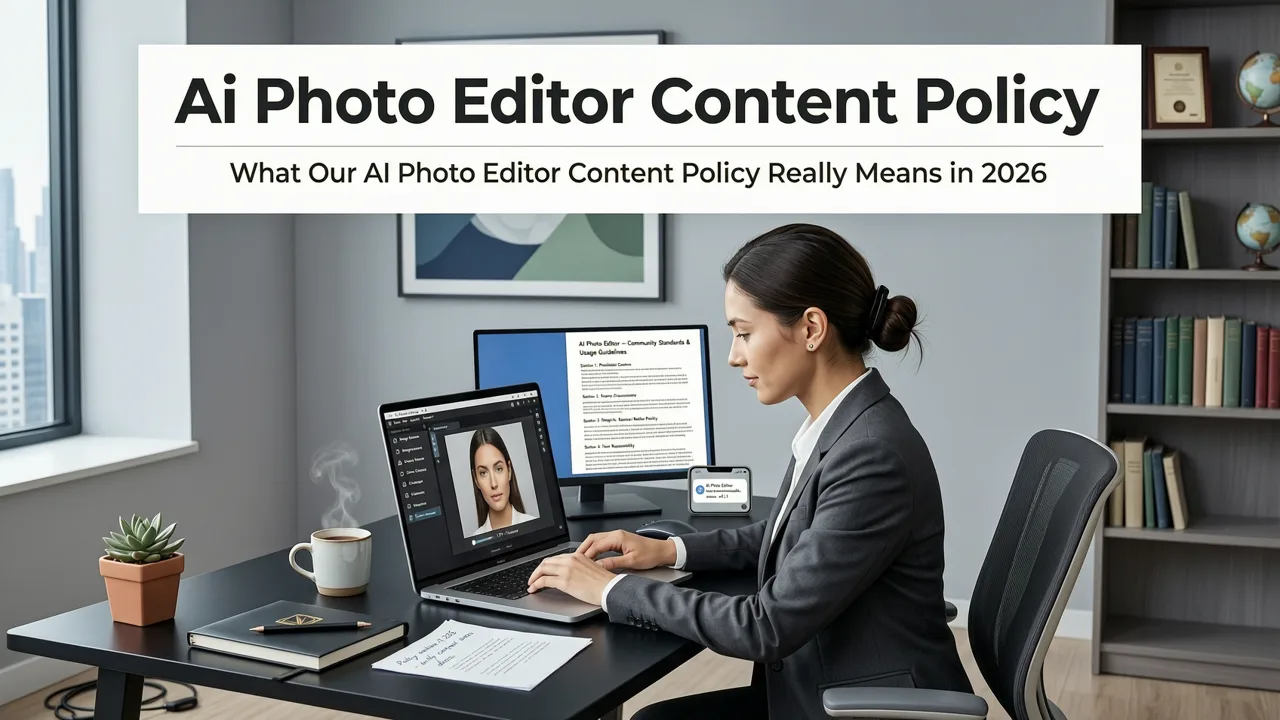
If you’re searching for an AI photo editor content policy, you’re not just skimming terms of service—you’re evaluating trust. In 2026, responsible AI editing means more than filtering explicit content; it means upholding creative integrity, preventing deepfake misuse, protecting identity rights, and supporting ethical self-expression—without over-censorship or opaque enforcement. At AI Image Editor, our content policy is publicly grounded, layered, and co-designed with digital rights advocates, platform safety researchers, and creators worldwide.
What Our AI Photo Editor Content Policy Really Means in 2026
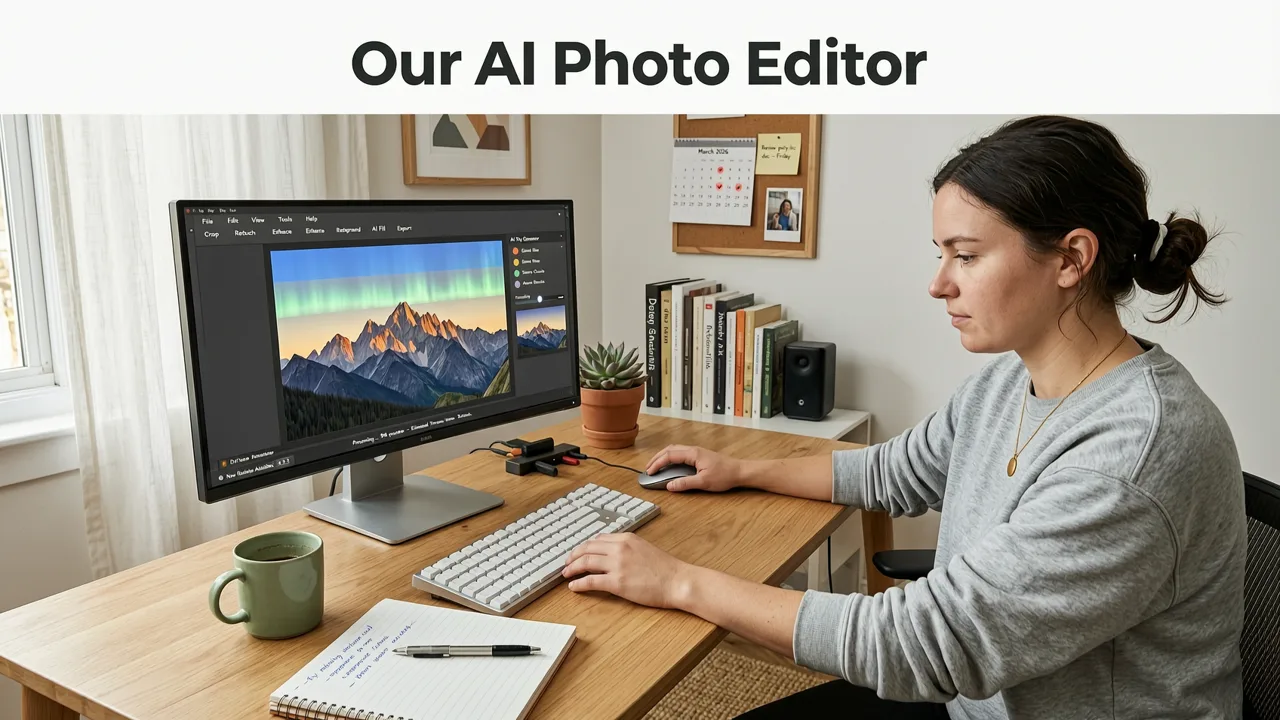
In 2026, a robust AI photo editor content policy must answer three core questions: What can’t be generated or altered? How is enforcement applied—not just declared? And what safeguards exist to protect legitimate creative, professional, and expressive use cases?
Ours does all three—and goes further. Unlike many platforms that rely solely on reactive moderation or black-box classifiers, AI Image Editor’s policy is proactive, explainable, and context-aware. It’s informed by real-world misuse patterns observed across social media, e-commerce, and news ecosystems in 2025–2026—and refined through quarterly audits with external ethics reviewers.
Meta allows anyone's photos to be used in AI images unless users opt out
by FOX 32 Chicago
1. Core Prohibitions: Clear Boundaries, Not Ambiguous Bans
We prohibit edits that:
- Generate or manipulate non-consensual intimate imagery — including synthetic nudity, sexualized depictions of minors, or unauthorized likeness replication. This aligns with global standards like the EU AI Act’s high-risk classification for biometric manipulation and U.S. state laws (e.g., California AB-2679).
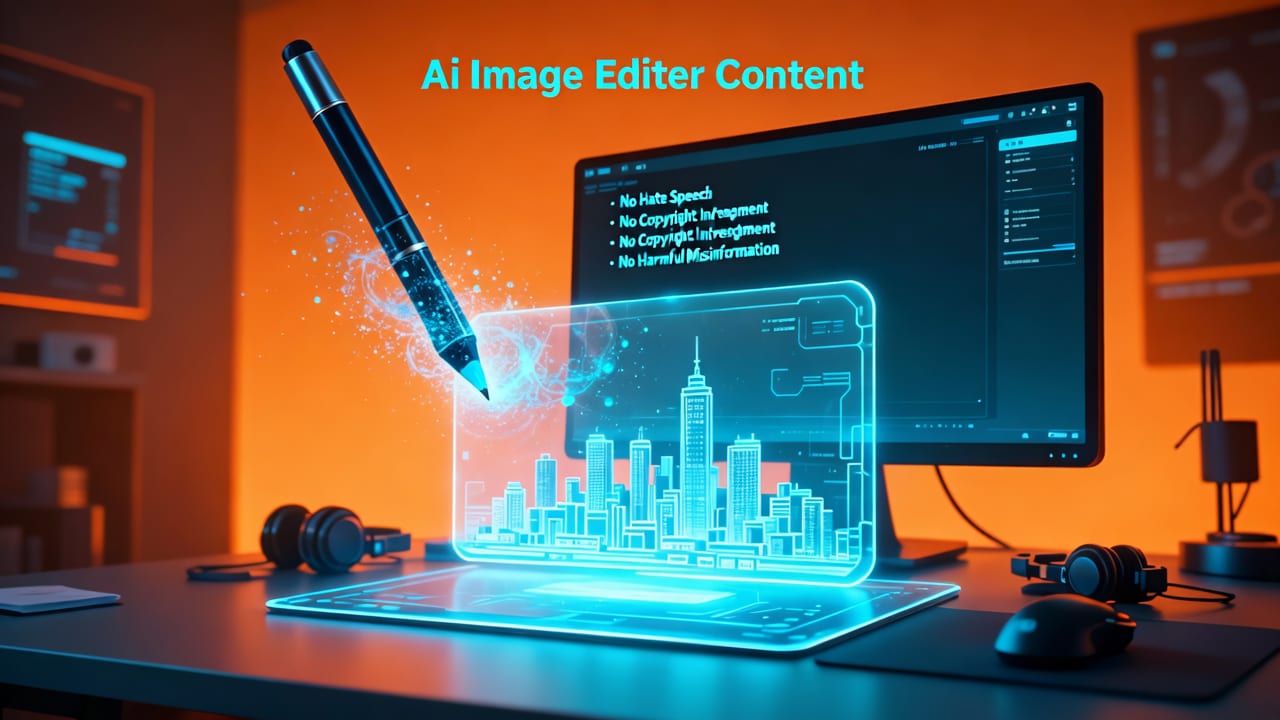
- Create or amplify deceptive political or public-safety content — such as forged election materials, fake emergency alerts, or manipulated footage of public officials during crisis events. Our system flags and blocks prompts referencing real-time elections, natural disasters, or verified breaking news events unless uploaded with verifiable journalistic credentials.
- Facilitate harassment, impersonation, or identity-based targeting — including edits designed to degrade, ridicule, or misrepresent individuals based on race, religion, disability, gender identity, or other protected characteristics. We treat this as a systemic risk—not just an individual violation.
- Bypass copyright-protected visual assets at scale — such as generating photorealistic replicas of trademarked product packaging, branded apparel, or copyrighted artwork without transformative purpose or licensing evidence.
Note: We do not ban satire, parody, artistic abstraction, or educational illustration—even when involving recognizable figures—as long as intent and context are clearly non-deceptive. That distinction matters. For example, a cartoon-style meme of a politician using our AI Image Editor No Restrictions tools is permitted; a photorealistic fake resignation letter image is not.
2. Enforcement Architecture: Three Layers of Responsibility
Our AI photo editor content policy isn’t enforced by one algorithm or one team—it’s embedded across three coordinated layers:
- Prompt-Level Guardrails: Real-time analysis of text prompts using semantic intent modeling—not just keyword matching. If a prompt says “make me look like [celebrity] in a swimsuit,” our system recognizes both identity replication and objectification context—not just the celebrity name. It surfaces a soft block with contextual guidance (“Did you mean to try our AI portrait retouching free tools for natural enhancement?”) rather than a hard rejection.
- Output-Level Verification: Every edited image undergoes lightweight, on-device perceptual validation before cloud processing begins. This includes face consistency checks (to detect unnatural morphing), texture coherence scoring, and metadata integrity verification—especially for uploads claiming journalistic or archival origin. This layer powers our AI Image Editor Safe for Work compliance mode.
- Human-Audited Feedback Loop: All blocked or flagged edits are anonymized and routed to our rotating Review Council—a global panel of 42 creators, educators, legal experts, and accessibility advocates. Their quarterly reports inform model retraining, policy updates, and transparency disclosures. Nothing is ‘automated forever’ here.
How We Balance Safety With Creative Freedom in 2026
A common misconception is that strict content policies equal creative restriction. In reality, the opposite is true: clarity enables confidence. When users know exactly where boundaries lie—and why—they experiment more freely within them.
For instance, our policy explicitly permits:
- Ethical portrait enhancement — smoothing skin texture, adjusting lighting, or correcting color balance in personal photos, as long as identity remains recognizably intact (AI Portrait Retouching Free workflows follow this standard).
- Educational & historical reconstruction — restoring faded family photos, colorizing archival images, or simulating period-appropriate clothing for school projects (with watermarking options enabled by default).
- Commercial product visualization — generating lifestyle mockups of your own physical products against custom backgrounds, provided source images are owned or licensed (upscale image without quality loss ensures fidelity for print-ready outputs).
- Accessibility-driven edits — increasing contrast for low-vision users, adding descriptive alt-text overlays, or converting complex infographics into simplified visual summaries.
This isn’t permissiveness—it’s precision. We distinguish between harmful synthesis (e.g., fabricating evidence) and constructive augmentation (e.g., restoring a damaged heirloom photo). The line isn’t drawn at realism, but at consent, context, and consequence.
Transparency Measures You Can Verify Today
We don’t just publish a policy—we make it inspectable:
- Public Policy Dashboard: Updated monthly with metrics on blocked prompts, appeal rates, false-positive corrections, and regional enforcement variance. No aggregated “99% accuracy” claims—just raw, sortable data.
- Explainable Rejection Notices: When an edit is restricted, you receive a plain-language reason—not “violation of Section 4.2b.” Example: “This prompt asks to remove identifying features from a face in a crowd photo, which could enable anonymity bypass in surveillance contexts.”
- Appeal Pathway with Human Review: All appeals are reviewed within 48 business hours by trained staff—not LLM-generated responses. You’ll get a decision, rationale, and optional policy suggestion if your use case reveals a gap we hadn’t considered.
- Creator Co-Design Program: Since Q2 2025, over 1,200 creators have contributed to policy refinement via our open feedback portal. Their input directly shaped our 2026 update on deepfake disclosure requirements for commercial clients.
Why Most AI Photo Editors Get Content Policy Wrong in 2026
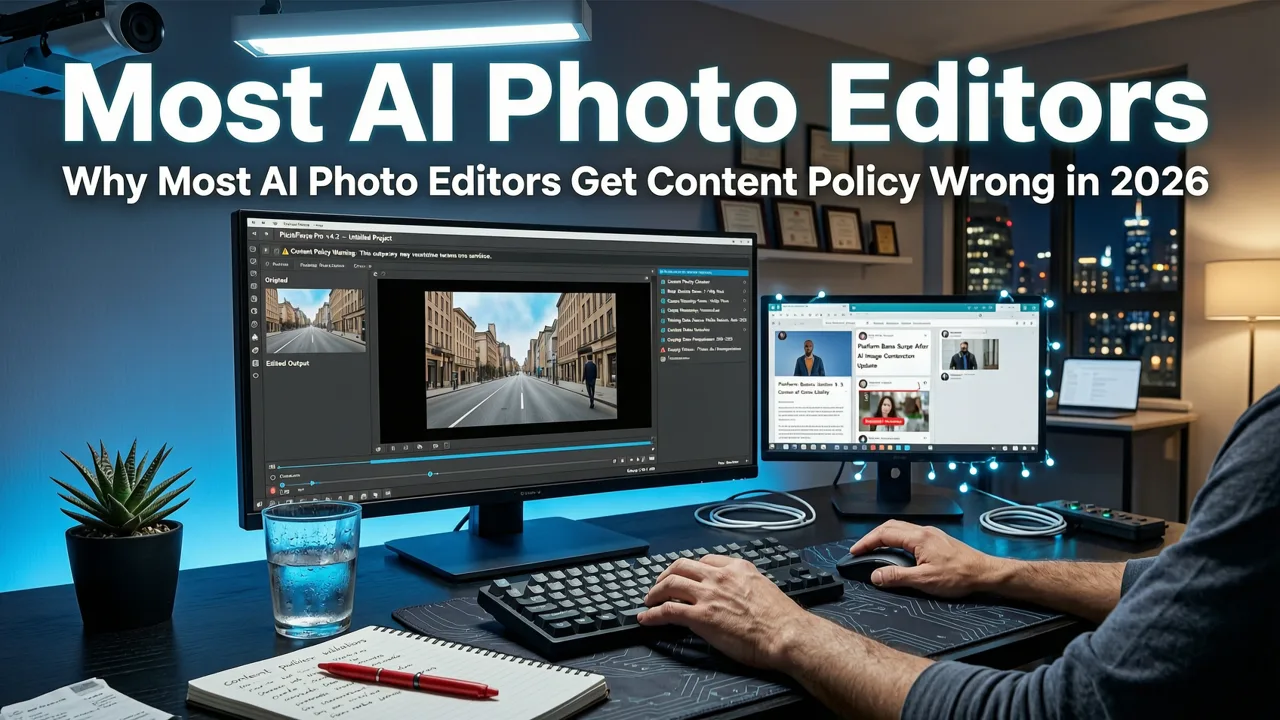
Many competitors still operate under outdated assumptions—treating content policy as either a legal afterthought or a marketing checkbox. Here’s what doesn’t work anymore:
❌ Relying Solely on Third-Party Moderation APIs
Off-the-shelf classifiers trained on generic web data often mislabel cultural expression (e.g., flagging traditional dress as “inappropriate attire”) or miss context-specific harms (e.g., permitting edits that weaponize medical conditions). We use hybrid models—fine-tuned on creator-submitted edge cases, validated against Google AI’s Responsible Innovation Framework and OpenAI’s content policies, then stress-tested by adversarial red teams.
❌ Enforcing Uniform Rules Across All User Tiers
One-size-fits-all moderation fails creators, journalists, and educators alike. A wedding photographer shouldn’t face the same scrutiny as a viral meme account. That’s why our policy applies differentiated thresholds: higher scrutiny for bulk commercial uploads, lighter guardrails for single-image personal use, and opt-in enhanced verification for accredited professionals (e.g., verified press, academic institutions, NGOs).
❌ Hiding Enforcement Logic Behind “AI Decisions”
Vague explanations like “system detected unsafe content” erode trust and prevent learning. In 2026, users deserve to understand *why*—and how to adjust. Our interface shows editable reasoning trees: “Blocked because [prompt] + [image type] + [intended output] matches pattern ID #A72X (non-consensual likeness amplification). Try rephrasing with ‘natural lighting adjustment’ instead of ‘make me look like…’.”
Comparing AI Photo Editor Content Policies: Key Differences in 2026
Not all policies are created equal. Below is how AI Image Editor’s approach compares to industry norms—based on public documentation, third-party audits, and user-reported enforcement behavior as of mid-2026.
| Policy Dimension | AI Image Editor (2026) | Industry Average (2026) | Key Gap |
|---|---|---|---|
| Transparency | Public dashboard + explainable rejections + quarterly audit reports | Static PDF policy doc + vague moderation notices | Users can’t verify consistency or learn from blocks |
| Appeal Process | Human-reviewed within 48h; option to suggest policy updates | Automated response only; no escalation path | No recourse for false positives or evolving use cases |
| Context Sensitivity | Prompt + image + user tier + stated intent analyzed together | Prompt-only analysis; no image understanding | Fails on satire, education, accessibility, and restoration |
| Creator Input | Co-designed with 1,200+ creators; public issue tracker | No documented creator consultation | Policies drift from real-world needs |
| Commercial Safeguards | Opt-in verification for businesses; watermarking defaults | No distinction between personal and commercial use | Risk exposure for SMBs and agencies |
How to Use Our AI Photo Editor Responsibly—A Creator’s Checklist
Even with strong policies, responsible use starts with you. Here’s how to stay aligned with our AI photo editor content policy while maximizing creative impact:
- Start with consent: When editing others’ photos—even friends or colleagues—confirm permission for the specific edit and its intended use (e.g., “Can I lighten shadows in this headshot for your LinkedIn profile?”).
- Label synthetic elements: If sharing edited images publicly, use our one-click disclosure badge for AI-assisted enhancements—especially for portraits, product visuals, or documentary contexts.
- Verify source ownership: For commercial uploads, ensure you hold rights to the original image—or have explicit license terms covering AI transformation.
- Use context-aware prompts: Instead of “make her look younger,” try “soften fine lines while preserving natural texture and expression.” Our system responds better to constructive framing.
- Leverage safe modes intentionally: Enable School Mode (blocks mature themes), Work Mode (adds metadata logging), or Archive Mode (preserves EXIF and disables generative fills) based on your project’s sensitivity.
What Happens If You Accidentally Violate the Policy?
First: no automatic bans. Minor, unintentional violations trigger a guided correction flow—not punishment. You’ll see:
- A clear explanation of the concern,
- One-click suggestions to refine your prompt or upload,
- Link to relevant policy section and examples,
- Option to request human review if you believe context was missed.
Repeat violations (three or more in 90 days) trigger a brief, collaborative onboarding call with our Trust & Safety team—not account suspension. Our goal isn’t deterrence through fear, but alignment through understanding.
Looking Ahead: Policy Evolution in the Age of Multimodal AI
As AI evolves—from static image editing to video, 3D, and real-time AR overlays—our AI photo editor content policy will expand accordingly. In late 2026, we’ll roll out:
- Video Integrity Signaling: Automatic watermarking and cryptographic provenance for AI-edited clips, compliant with C2PA standards.
- Audio-Visual Consistency Checks: Detecting lip-sync mismatches or voice cloning in talking-head edits.
- Regional Policy Adaptation Engine: Dynamic rule application based on local laws (e.g., stricter biometric rules in EU member states, expanded cultural heritage protections in Japan and Brazil).
But the foundation won’t change: human oversight, creator partnership, and unambiguous accountability. Because in 2026, the most powerful AI photo editor isn’t the one that does the most—it’s the one you can trust to do it right.
Conclusion: Trust Is Built, Not Programmed
An AI photo editor content policy is more than a compliance document—it’s a covenant between tool and user. At AI Image Editor, we build that covenant daily: through transparent enforcement, responsive appeals, and unwavering commitment to ethical creativity. Whether you’re touching up a baby photo, designing an e-commerce catalog, or illustrating a classroom lesson, you deserve clarity—not confusion—about what’s possible and why.
Ready to edit with confidence? Upload your first image and experience policy-aware AI editing—designed for humans, tested by creators, and updated for 2026.